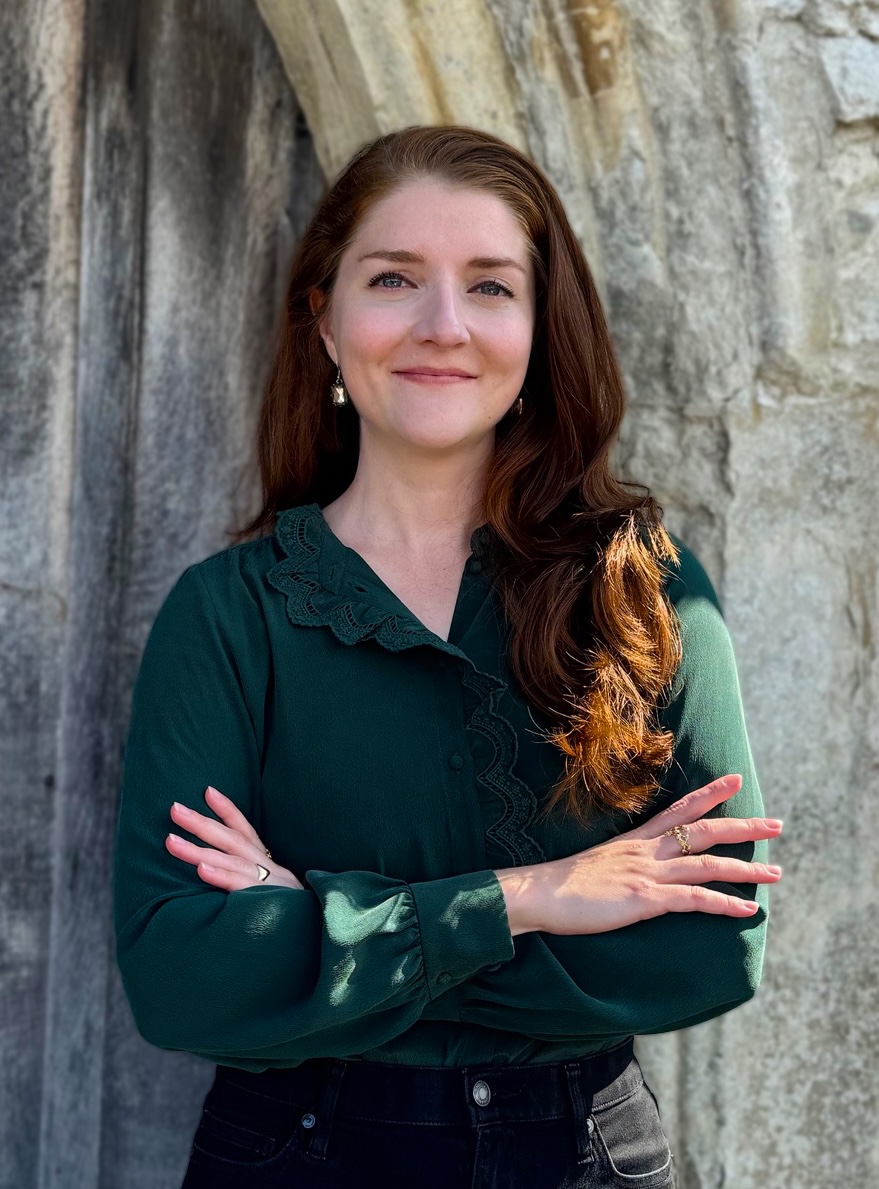
E.A. Bard’s upcoming debut novel, A Tempest of Ravens, is perfect for fans of One Dark Window and Outlander. Set in the Scottish Highlands, it features a fiercely strong protagonist, Maeve, who believes she has been cursed her entire life with power. Releasing October 24, it is a romantasy novel that will make you swoon and send you into another time and place.
I had the chance to interview E.A. Bard in anticipation of her book!!
What inspired you to write A Tempest of Ravens? Do you feel particularly connected to any of the characters, if so, which one and why?
I was living in Scotland at the time, which I will forever be grateful for, and it was so inspiring just being surrounded by so much beauty and history. After I visited Dunnottar Castle I fell completely under its spell, and I wanted to write about a particularly epic episode from its past. I was also inspired to write my own novel after reading Outlander and thinking, hey, I could do this too, but about an earlier era of Scottish history that’s been mostly forgotten.
I feel really connected to both Maeve and Eamon, since I gave both of them (unfortunately) quite a bit of my own personal trauma. I wrote ATOR to try and tell a good story, but it was also extremely cathartic and healing to create.
What does your writing process look like? Are you a plotter or a pantser?
After learning the hard way with ATOR—which I pantsed and which required a decade of rewrites—I’m now a plantser. I try to have the main plot points and the ending figured out beforehand, but I allow myself a bit of discovery writing in between to see where the characters lead me.
You’ve said before that music heavily inspires your writing. What music has shaped A Tempest of Ravens? Is there a particular artist or group of artists that you found yourself coming back to?
I love building playlists to help me brainstorm a new project, and then I’ll listen to them while I’m writing and revising. For ATOR, I focused on traditional Scottish music, Gaelic and Welsh folk songs, and period-accurate music, so I could feel like I was really sitting around the fire with the characters in 1651.
I’m also hugely inspired by film and video game soundtracks, especially when they capture the exact mood I’m going for, and I can imagine my book’s scenes playing out like a movie. And I love finding modern songs that evoke the characters and their dynamics, so my playlists are usually a jumble of genres and time periods. You can listen to the ATOR playlist on Spotify or Tidal.
Some artists I always come back to for all my projects are: Hans Zimmer, Florence + The Machine, Hozier, Sleep Token, Saint Mesa, and Loreen.
A Tempest of Ravens is set in Scotland. What drew you to this particular location for the setting?
Ever since I was a kid, I’d always dreamed of going to Scotland, and then I had the incredible opportunity to go to grad school there. I tried to visit as many historical sites and museums as I could during my free time, and I was so inspired by living among all that history, I knew I had to write a novel set there.
Maeve and some of the other characters in A Tempest of Ravens have strong connections to magic. If you were able to choose one of their magical powers for yourself, which would you choose, and why?
I think I’d like to have the ability to communicate with animals. Summoning a flock of ravens could be very handy in a tight spot!
What is the best advice you’ve ever received about writing, and what advice would you give to new writers just starting out?
The best advice I’ve ever gotten about writing is to read widely. Make sure you read your genres too, but reading widely is the best way to improve your craft and unlock your brain. I would suggest the same for new writers—read a lot, and often, and try to see how each author makes their stories work.
If you could travel into your book to meet any of the characters, who would you choose and why?
I’d really love to meet Brahan. He’s based on a historical figure who was known throughout the Highlands for his prophecies and wisdom, but was brutally murdered for witchcraft, so in ATOR I wanted to rewrite his story and hopefully help his legend live on. He sounds like he’d be such a fascinating person with stories for days.
You create incredibly beautiful mood boards for your characters and setting. What is your process in creating these, and do they also provide additional inspiration for your story?
Thank you! I’m a very visual writer, and since I come from a background in art history, I love finding inspiration in paintings, sculptures, and historical dress, and their individual color palettes and textures.
I always build Pinterest boards for each book, and then I’ll create mood boards around a specific theme with the most striking or evocative images. They also help me to engage all five senses when I’m writing, to make the story more immersive for the reader.
Who are some of your favorite authors that have shaped you as a writer today?
In no particular order, these writers have definitely shaped me and my writing style: JRR Tolkien, Bernard Cornwell, Kate Mosse, Celia Rees, Madeline Miller, Celestine Martin, and Rachel Gillig.
If you could live in any place or time period, which would you choose and why?
I’m not sure about living there, but I would love to very briefly visit Venice in the early 1500s. Experiencing the Venetian Renaissance first-hand would be magical.
Can you tell us about what project you are working on next?
I’m working on the sequel to ATOR, which will continue directly after the events of book one, and will be coming out next year!
What are your hobbies when you are not writing? Is there a creative hobby that you would like to learn?
I love baking, especially autumnal recipes for cozy season. I’d love to get into another creative hobby, maybe drawing or calligraphy.
What is one thing you hope people will take away after reading your book?
I hope people enjoy it as a fun, romantic adventure and bit of escapism, but I also hope they find something to connect to, so they feel seen as well.
Did you do extensive research to build the setting and world of this story? If so, what books could you recommend to readers who want to learn more?
I researched as much as I could about 1650s Scotland, and found way more material than I could ever use. But I hope I weaved in enough context and detail to help the reader get a sense of what life might have been like, with some extra fantasy elements too.
This book is a great overall history of this era:
-Stuart Reid, Crown, Covenant and Cromwell: The Civil Wars in Scotland 1639-1651. Frontline Books, 2012.
And this book is a fascinating (and enraging) study of how the witchcraft trials took off in early modern Scotland, and how the patriarchal societal structure in Europe and America has shaped our whole world today:
-Claire Mitchell and Zoe Venditozzi, How to Kill a Witch: A Guide for the Patriarchy. Monoray Publishing, 2025.
Writing can often be a solitary process. What advice could you give to new writers on how to find or form a writing community?
I’ve met all my writing friends and critique partners online, but it was a bit easier back in the golden days of blogging and Twitter. Now that social media is more scattered, I would suggest picking one or two platforms, searching relevant hashtags for your genre and writing stage (like #amwriting or #amquerying), and join in with your own posts. Then interact with other people’s posts, be positive and genuine, and see if you vibe with anyone.
There are also some open Discord servers for writers, so that can be a great way to meet folks and exchange your work for feedback. I’d recommend only exchanging a chapter or two at first to make sure you gel with each other before sending your whole manuscript to anyone. We have to be extra careful these days, but I’ve found truly wonderful folks online this way.
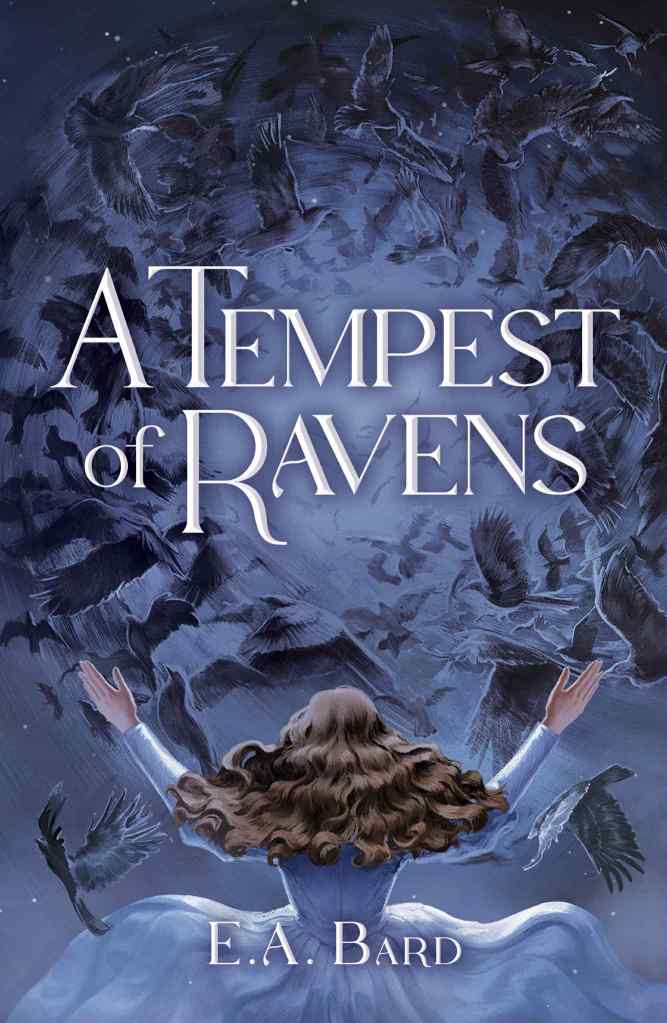
You can also check our her website here:
Www.bardwrites.com
 Of Worlds Forgotten
Leave a comment